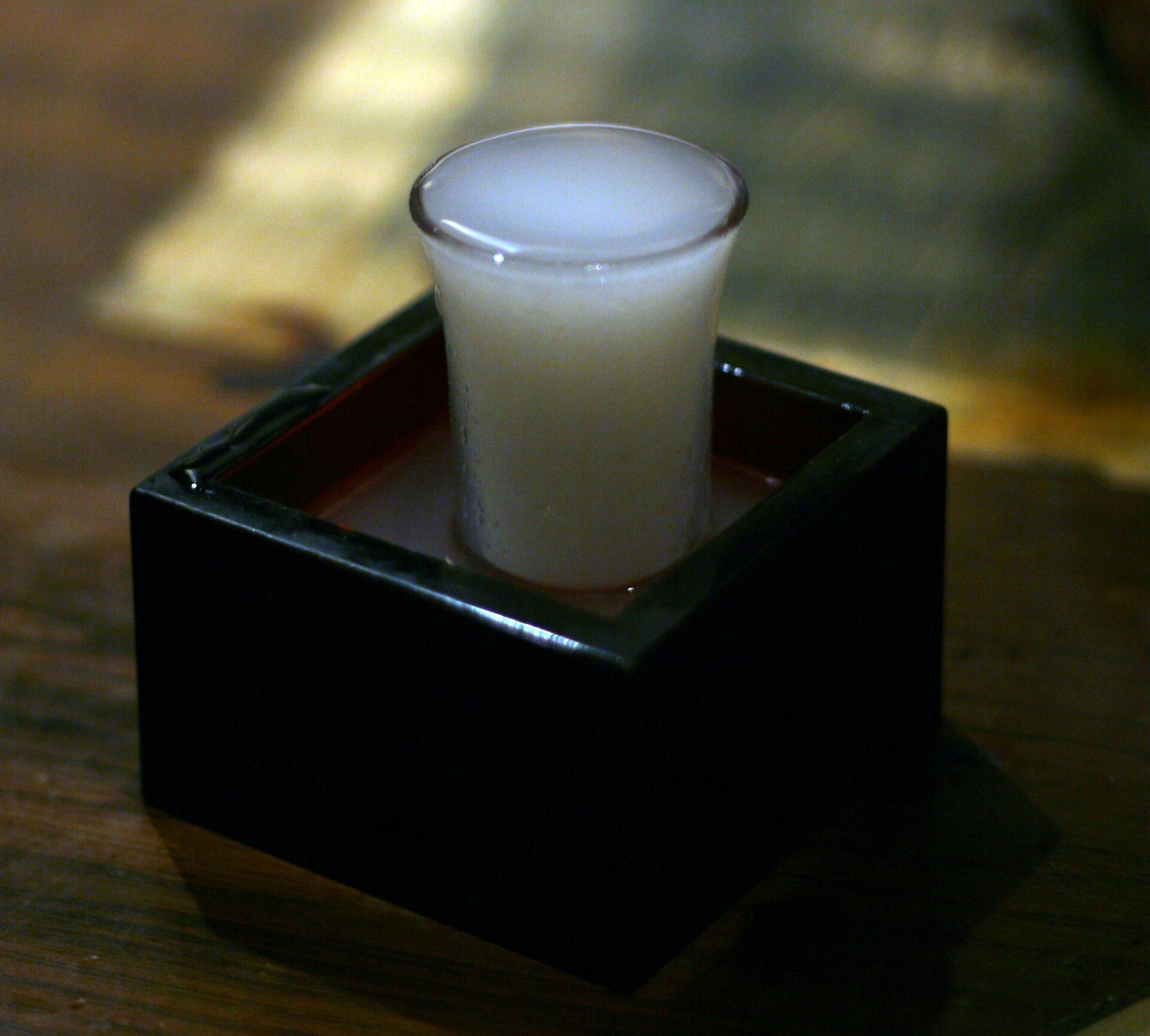
Six bottles went into bags in Glover Park on June 12, five of them brewed in Japan and one in Oregon. When the cards were added up, the Oregon bottle was on top. Momokawa Pearl scored 4.2 out of 5, a fifth of a point ahead of a tokubetsu junmai from a Fukushima brewery that has been running since 1716. Nobody scoring it knew where it came from, since that first tasting was poured blind, and the result is a good reason to look at who makes sake in this country and what rules they work under.
What the law lets an American brewery call its sake
Sake made in the United States sits in an odd spot between categories. The TTB, which regulates alcohol at the federal level, says on its sake page that for production and tax, sake is treated as beer under the Internal Revenue Code, and that anyone wishing to produce it must qualify as a brewery. For labeling and advertising the same agency treats it as wine. So an American sake brewer holds a brewery permit and files its labels under the wine rules.
Japan's grading system does not follow the bottle across the Pacific. Words like ginjo and daiginjo are defined in Japanese law by milling ratio and method, as covered in the post on what junmai daiginjo costs to make, and those definitions bind breweries in Japan. When an Oregon label says junmai ginjo, the brewery is applying that term to itself.
Japan did draw one line. On December 25, 2015, the National Tax Agency designated Nihonshu, Japanese sake, as a geographical indication. The NTA's product specification requires that the rice and rice koji originate in Japan and that the sake be made there. A USDA report on the designation noted that it does not stop foreign producers from using the word sake, and predicted little effect on American brewers. Everything below is sake, and none of it is Nihonshu.
Five American breweries, from their own pages
SakéOne is the oldest of the group by some distance. Its own history says it was established in 1992 as an importer of Japanese sake and began brewing in Forest Grove, Oregon, in 1997. The brewery credits its water to deep aquifers on the eastern slope of the Oregon Coast Range, names the Sacramento Valley in California as a rice source, and lists Takumi Kuwabara as master brewer since 2018, after more than thirteen years at Yaegaki Shuzo in Japan. It still imports, which is how a second SakéOne bottle ended up on our June table. Murai Family Tanrei Junmai, brewed in Aomori and imported by SakéOne, finished fourth.
Brooklyn Kura was started by Brian Polen and Brandon Doughan, who met at a wedding in Japan in 2013, according to a SAKETIMES profile from March 2018. That profile describes Doughan, the head brewer, as a former biochemist at Oregon Health and Science University, and reports that the brewery became New York's first sake brewery that January, using Yamada Nishiki and Calrose grown in the United States and growing its own koji from spores sourced in Japan. The brewery's own site adds that it entered a long-term partnership with Hakkaisan, a Niigata brewery, in 2021, and lists its brewery and taproom at Industry City in Sunset Park.
Kato Sake Works is the other Brooklyn brewery. Shinobu Kato grew up in Koenji in Tokyo, worked for Nissan in Nashville, started brewing in a tiny kitchen setup, and moved to New York in 2016 to open a brewery, according to his own page. The brewery's sake list is unusually candid. All eight bottles, from a kimoto to a doburoku that is never pressed, are made from Calrose rice polished to 60 percent. Brooklyn Kura uses Calrose too, next to Yamada Nishiki, and what separates the two kinds of grain is laid out in our post on sake rice. Kato's site says online orders ship within New York State only.
Vermont Sake in Monkton calls itself the state's first sake brewery and describes its scale as nano, or maybe pico. Its rice comes from the Isbell family in Arkansas, Titan for the first batch and Yamada Nishiki with Titan for later ones, and it treats every batch as a separate experiment. Proper Sake Co. in Nashville describes itself as specialists in kimoto and yamahai, the two older ways of starting a fermentation, and also runs Rice Vice in East Nashville and New Orleans.
Why the Oregon nigori won
We can only say what the numbers show, and the numbers are interesting. Blue Note Sake's product page lists Pearl at a sake meter value of -18 and acidity of 2.5, with rice milled to 58 percent and 14.8 percent alcohol. A negative sake meter value means sweet, and -18 is far down that end. The acidity is the other half. Okunomatsu, which came second, is listed at 1.4, and the two kimoto bottles at the bottom of the table, Kurosawa and Hatsumago, at 1.7 and 1.5. Pearl carries a great deal of sugar and more acid than anything else poured that night that publishes a figure.
That combination is how a sweet drink avoids tasting flat, and it suits a cold pour. Pearl was served cold, and so was everything else on the table that night. The post on serving temperature argues that both kimoto bottles would have shown better warm. A cold blind pour favours whatever is built to be drunk cold, and a chilled nigori is built for nothing else.
Pearl is also genshu, meaning no water was added after pressing, and a nigori keeps some rice solids in the bottle. Both give it more body than its alcohol figure suggests. None of that proves it is a better sake than the Okunomatsu, and the margin was a fifth of a point. It shows that a label nobody could see did not hold it back, and that an American brewery has been making something a room of D.C. drinkers liked better than the five Japanese bottles beside it.
Two more American bottles on October 30
The next tasting, on Friday, October 30, has two American bottles in it, both sent by the breweries. Vermont Sake sent Batch 7, which the brewery lists as a junmai of Yamada Nishiki and Titan rice fermented with the #9 yeast. Proper Sake sent The Diplomat, a nama yamahai ginjo. The full lineup so far, and who sent each bottle, is in what's in the next tasting. Like every bottle, each is introduced to the room with its brewer's story before anyone scores it, and their scores will go on the score sheet next to June's six.
The ones we hear most
Who makes sake in the United States?
Among others, SakéOne in Forest Grove, Oregon, brewing since 1997; Brooklyn Kura in Industry City, Brooklyn, which opened in 2018; Kato Sake Works in Bushwick, Brooklyn; Vermont Sake in Monkton, Vermont; and Proper Sake Co. in Nashville, which specialises in kimoto and yamahai.
Can American sake be called Japanese sake?
No. Japan designated Nihonshu, or Japanese sake, as a geographical indication on December 25, 2015, limited to sake made in Japan from Japanese rice and koji. The USDA noted that the designation does not stop brewers elsewhere from using the word sake.
Do Japanese sake grades like junmai ginjo apply to American sake?
Not legally. Japan's designations are set by Japanese law. An American brewery that prints junmai ginjo on a label is applying the term to itself, held to its own standard.
Which sake won the first Kasumi Club blind tasting?
Momokawa Pearl, a junmai ginjo nigori genshu brewed by SakéOne in Oregon, scored 4.2 out of 5 and finished first of six on June 12, 2026, ahead of five bottles brewed in Japan.
Written for Kasumi Club, a free sake tasting club in Washington, D.C. Every bottle we have scored, with its score out of 5 and full specifications, is on the score sheet, and the terms are defined in the glossary.
Send us a bottle and a room of D.C. drinkers will tell you the truth.
Jacob introduces every bottle with its brewer's story, then the room scores it out of 5. Breweries and importers use us to test the D.C. market, and every bottle we pour gets a page with its score, whether it wins or not.
How it works for breweries