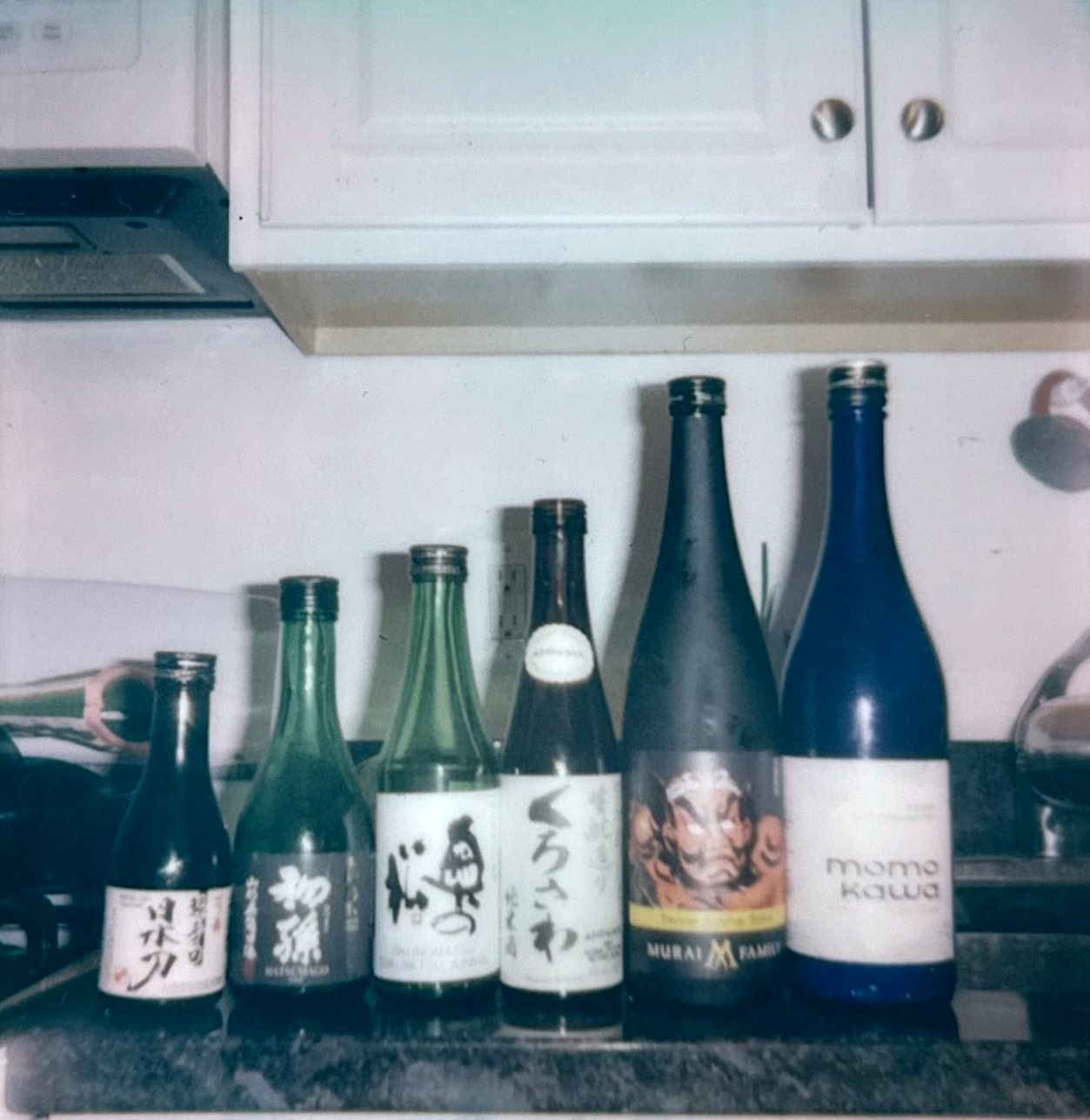
Every bottle we have poured, and every number we have on it.
Each one went into a bag, came out of a glass, and got scored out of 5 on
overall impression by the members in the room. Below is what each bottle scored and everything
we could confirm about it with the brewery or the importer.
Reading this does not require joining anything. There is no form in front of it
and there never will be.
In short
Kasumi Club has poured 6 sake at 1 blind tasting in Washington, D.C. The scores run from 2.0 to 4.2 out of 5, and the average is 3.49.
The highest scoring bottle so far is Momokawa Pearl at 4.2 out of 5, brewed by SakéOne in Forest Grove, Oregon.
6
Bottles scored
1
Tastings
2.0–4.2
Score range
3.49
Average
The whole score sheet
One row per bottle, ranked by blind score. Every figure here is published by
the brewery or the importer, or it is left blank.
Every sake Kasumi Club has poured, ranked by blind score out of 5. A dash means
the figure is not published by the brewery or the importer, and is left blank rather than
estimated.
Also available as scores.csv,
free to reuse with attribution to Kasumi Club.
How to read these numbers
Five terms cover almost everything on this page and almost everything on a
back label. There is a fuller glossary of sake terms too.
Blind score
Out of 5, overall impression, averaged across the members present. Nobody in the room knew the brewery, the price or the country while they scored.
Seimaibuai
How much of each rice grain is left after polishing. 60% means 40% of the grain was milled away. Lower numbers mean more milling, which usually means a cleaner and more aromatic sake, and a more expensive one.
SMV
Sake meter value. Zero is the middle of the scale, negative runs sweet and positive runs dry. A +7 is firmly dry. It measures density rather than taste, so treat it as a direction and not a verdict.
Acidity
Usually between 1.0 and 2.0. Higher acidity carries food better and makes a sweeter sake taste drier than its SMV suggests.
Junmai
Rice, water, koji and yeast, with no distilled alcohol added. Ginjo and daiginjo sit on top of that and describe milling and a longer, colder ferment.
Flight one. June 12, 2026.
Six bottles, poured in the order below, labels in a bag. Scored out of 5 on overall impression by the members present. Glover Park, Washington, D.C.
What the room saidIt won on overall impression, and it was not close. It also finished ahead of a kimoto from Nagano made by a four week starter method that only about one in ten Japanese breweries still uses. Nobody knew any of that while they were scoring. If the labels had been showing, it is hard to believe an Oregon nigori takes first place.
What the room saidSecond place, and the score that was closest to the winner. The brewery describes it as a mellow aroma with a deep richness, and says it takes gentle warming well, which is a note worth acting on. Very few junmai are recommended warm by the people who made them.
What the room saidThird. Extra dry sake divides a table in a way sweeter styles do not, and this is the bottle people either put near the top of their card or near the bottom, with very little in between. The average lands mid table because of it, which is a good argument for reading the spread and not only the mean.
What the room saidFourth, in a tight cluster with third and fifth. Elegant and dry, with melon and apple on the nose, is how the importer puts it, and that reads as a fair description of a bottle that nobody disliked and nobody fought for.
What the room saidFifth of six, and this is the score worth arguing about. Kimoto sake is rustic on purpose. Skurnik's note is black walnuts and cacao nibs, which is not what most people expect a glass of sake to taste like, and a blind pour punishes anything unfamiliar. The serving instruction matters more here than the score does. Cold it reads lean and acidic, and warmed past 100°F it turns sweet and chocolatey. We poured it cold. That may be the whole story of its fifth place.
What the room saidLast, at 2.0, which was the largest gap of the night. Two things are worth saying about that. The first is that this was the second kimoto in the flight, and both kimoto bottles finished at the bottom, which says more about a cold blind pour than it does about either brewery. The second is that Hatsumago is versatile across temperature and we served it one way. It deserves a second pour, warm, before anybody concludes anything.
How the scoring works
Labels go in a bag before anybody arrives, and the bottles are poured in a fixed order.
Everyone scores what is in the glass on overall impression, complexity, aroma and mouth feel.
The overall number is the one published here. A first-night member's score counts the same as
anyone else's.
One night is one night. A bottle has to hold up across more than one tasting before it
becomes a standing order, and two of the scores above are already disputed inside the club
for reasons written on the bottle pages.
Specs we could not confirm against a brewery or an importer are left off rather than
guessed at, which is why some rows are shorter than others.
The ones we hear most
How does Kasumi Club score sake?
Labels go into a bag before anybody arrives and the bottles are poured in a fixed order. Everyone present scores what is in the glass out of 5 on overall impression, and the published figure is the mean. A first-night member's score counts the same as anyone else's.
How many bottles has Kasumi Club scored?
Six bottles across one tasting, held in Glover Park, Washington, D.C. on June 12, 2026.
Which sake scored highest?
Momokawa Pearl, a junmai ginjo nigori genshu brewed by SakeOne in Forest Grove, Oregon, at 4.2 out of 5. It beat four Japanese breweries in a blind pour.
Can I download the Kasumi Club scores?
Yes. The full score sheet is published as a CSV at https://kasumiclub.com/sake/scores.csv and is free to reuse with attribution.
Does Kasumi Club sell sake?
No. Kasumi Club is an informal buying group, not a licensed retailer. Group orders are placed through a licensed retailer with money collected from members in advance.
Send us a bottle and about twenty people will tell you the truth.
Kasumi Club pours everything blind. Breweries and importers use us to test the
D.C. market, and every bottle we pour gets a page with its score, whether it wins or not.