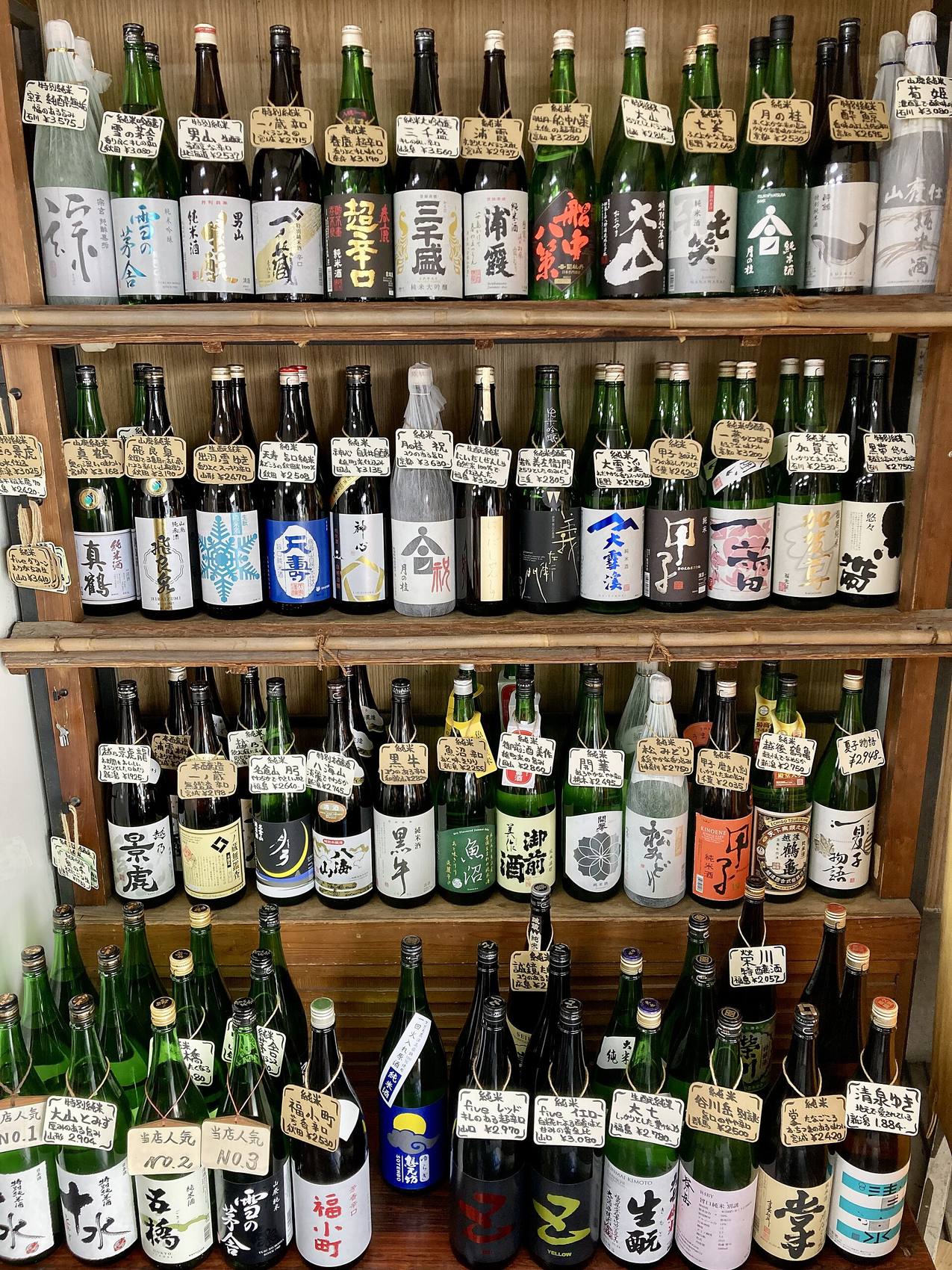
Most sake in an American shop is sold by people who have never been trained on it, next to a wine section that gets all the attention. The labels are working against you too, since the useful information is usually on the back in small type and some of it is in Japanese. Four pieces of information cover almost everything you need, and once you can find them the shelf stops being a guess.
One. The grade tells you what is in the bottle
Look for junmai. It means rice, water, koji and yeast, with nothing else added. If the label does not say junmai, a small amount of distilled alcohol was added during pressing, which is a legitimate technique rather than a defect, though it changes the texture and usually lightens it.
Ginjo and daiginjo sit on top of that and describe a longer, colder fermentation and more milling. Junmai ginjo is the sweet spot for most people and most prices. Honjozo is the added-alcohol equivalent of junmai and it is often the best value on a shelf, because it gets overlooked by people chasing the junmai word.
Two. The milling number tells you the style
Look for seimaibuai, or a bare percentage on the back label. It is how much of each rice grain is left after polishing. Sixty percent means forty percent of every grain was ground away before brewing started.
Lower numbers mean more milling, which usually gives you something cleaner, more floral and more expensive. Higher numbers keep more of the grain, which usually gives you more body and more savoury weight. Neither is better. A 70% junmai alongside food and a 45% daiginjo on its own are two different pleasures, and the second one is not the upgrade the price implies.
Three. One number tells you dry or sweet
Look for sake meter value, nihonshu-do, or a number with a plus or minus in front of it. Zero is the middle of the scale. Positive runs dry and negative runs sweet. Plus seven is firmly dry. Minus five is noticeably sweet.
It measures density rather than taste, so treat it as a direction rather than a verdict. If an acidity figure sits next to it, usually somewhere between 1.0 and 2.0, higher acidity will make the same sake taste drier than the meter value suggests, and it will carry food better.
Four. The process words tell you what you are in for
These four come up constantly, on back labels and on restaurant menus, and they are the ones worth memorising.
Nigori is the cloudy one. It gets pressed through a loose mesh, so some of the rice solids stay in the bottle, and what you are handed ranges from barely hazy to thick and white. Good nigori has enough acidity to keep the sweetness moving instead of sitting on your tongue.
Namazake, or just nama, is unpasteurized. Skipping the heat leaves it bright and sometimes lightly fizzy, because fermentation has not fully stopped, and you taste that in the first sip. Most of it is gone by early summer, which is why people chase it. It has to be kept cold the whole way.
Kimoto and yamahai are two old ways of starting fermentation. They take four weeks instead of two, which lets wild microbes get involved early. Kimoto comes out rounder and more savoury, while yamahai comes out gamey and strange enough that you will either love it or pass the glass to your neighbour. About one in ten Japanese breweries still makes either one.
Muroka genshu is undiluted and unfiltered, bottled at its natural 17 to 20 percent. Most sake gets filtered through charcoal and cut with water before bottling, and this skips both steps, so you get the full colour, body and strength the brewer built into it.
What to do with this in a shop tonight
Find the sake shelf, which is usually about four bottles wide and near the wine. Ignore the big cartons, which are built for warming and volume. Pick up anything that says junmai ginjo, turn it around, and find the milling number. If it is at or under 60 and the price sits between eighteen and thirty dollars, you are almost certainly holding something decent.
If you want to understand what the fuss is about, find a nigori and drink it cold out of a wine glass rather than a small cup. Sake aroma is quieter than wine aroma and a wine glass gives it somewhere to collect.
Why we do not trust labels at a tasting
At the first Kasumi Club tasting in June, six bottles went into bags and got scored blind by the room. A nigori brewed in Oregon beat four Japanese breweries, including a kimoto from Nagano made with the four week starter. Nobody knew what they were drinking while they scored it.
Everything above helps you narrow a shelf down to a few good candidates. What it will not do is tell you which of those you personally like, and the only thing that settles that is drinking them without knowing what they are. Every score we have is on the score sheet, with the full specs for each bottle.
The ones we hear most
What does junmai mean on a sake label?
Junmai means rice, water, koji and yeast, with nothing else added. If a label does not say junmai, a small amount of distilled alcohol was added during pressing, which is a legitimate technique rather than a defect, though it changes the texture and usually lightens it.
What does seimaibuai mean?
Seimaibuai is how much of each rice grain is left after polishing. Sixty percent means forty percent of every grain was ground away before brewing started. Lower numbers mean more milling, which usually gives you something cleaner, more floral and more expensive.
Is a lower polishing ratio better sake?
No. Lower numbers mean a cleaner and more aromatic style and a higher price, and higher numbers keep more of the grain and give more body and savoury weight. Neither is better, and the more expensive one is not an upgrade.
What does SMV or sake meter value mean?
Sake meter value, or nihonshu-do, is a number with a plus or minus in front of it. Zero is the middle of the scale, positive runs dry and negative runs sweet. Plus seven is firmly dry. It measures density rather than taste, so treat it as a direction rather than a verdict.
Written for Kasumi Club, a sake tasting and buying club in Washington, D.C. Every bottle we have poured, with its blind score and full specifications, is on the score sheet, and the terms are defined in the glossary.
Send us a bottle and about twenty people will tell you the truth.
Kasumi Club pours everything blind. Breweries and importers use us to test the D.C. market, and every bottle we pour gets a page with its score, whether it wins or not.
How it works for breweries