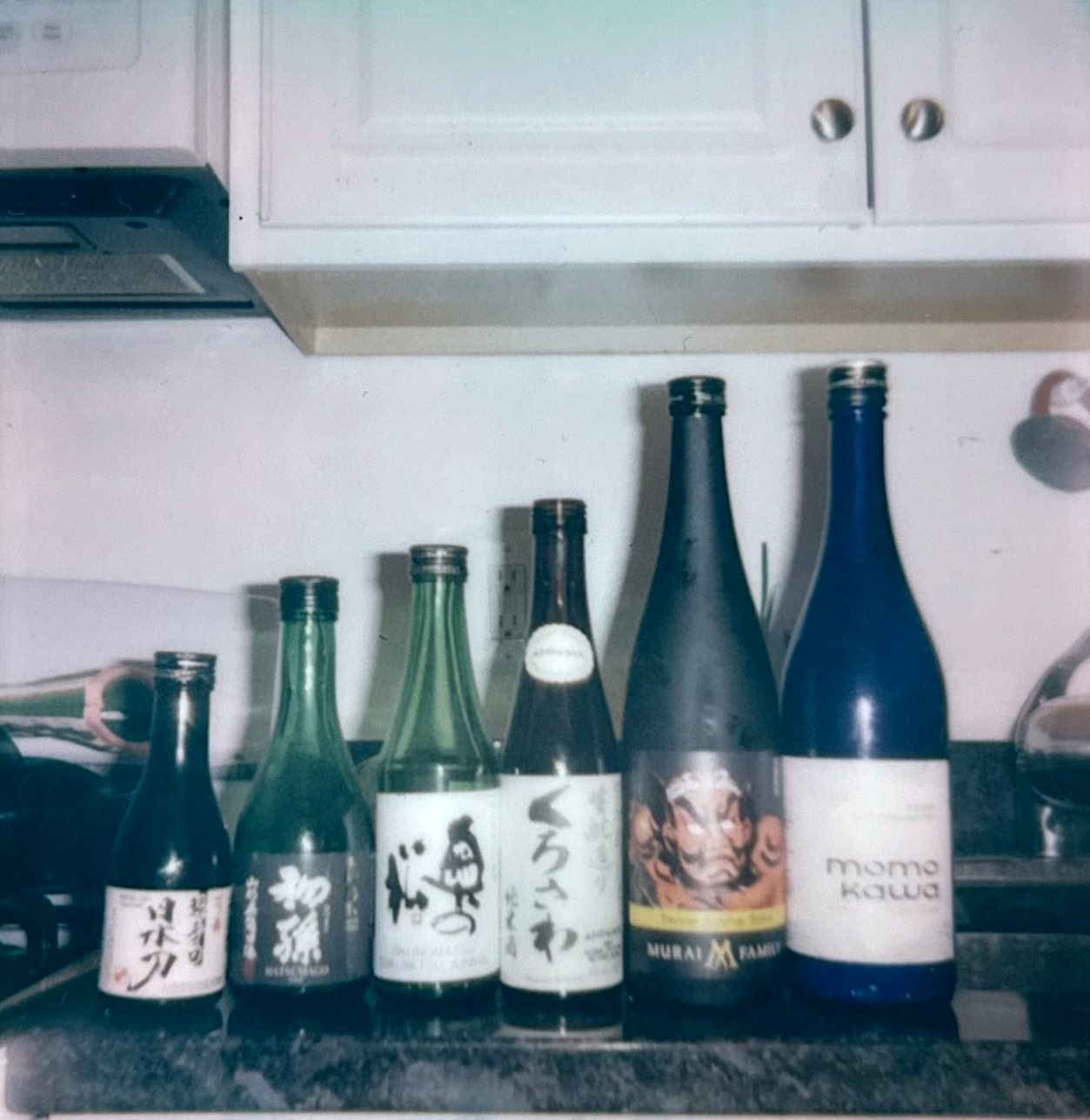
A blind tasting sounds more formal than it is. Nobody is being tested and there is no vocabulary you need before you walk in. Knowing the shape of the evening in advance does make the first one better, mostly because you spend it drinking rather than working out what is expected.
The shape of the night
Bottles go into numbered bags before anybody arrives. June had six of them, which is about the ceiling for one evening before palates give out. They get poured one at a time in a fixed order, and everybody scores what is in the glass before the next one comes out.
Nobody sees a brewery, a price, or a country until every card is in. Provenance is a story you tell yourself before the first sip, so the bag takes it away. That is not a gimmick. At the June tasting a nigori brewed in Oregon finished first, ahead of four Japanese breweries and a kimoto from Nagano made with a four week starter. It is hard to believe that result survives the labels being visible.
The four things you score
Overall impression, out of 5. This is the number that gets published on the score sheet and it is the only one that decides whether a bottle gets ordered. Score how much you want another glass of it. Do not score how impressive you think it is.
Complexity. Whether the sake changes between the front of the sip and the end of it, or whether it does one thing and stops. Neither answer is a fault. A simple sake that does its one thing beautifully alongside food beats a complicated one that is hard work.
Aroma. What you get from the glass before you drink. Sake aroma is quieter than wine aroma and it rewards a wine glass over a small cup, which is why we pour into wine glasses. Melon, banana, rice, cream, mushroom and wet stone are all things people in the room have said and been right about.
Mouth feel. Weight and texture. Whether it feels thin, silky, syrupy or grippy. Most people find this the easiest one once they stop worrying about vocabulary, and it is often what separates two bottles that smell similar.
Three things worth knowing before your first one
Your score counts the same as everybody else's on your first night. There is no seniority in the room and no house palate to agree with. The whole reason to pour blind is that a first-timer's honest 2 is more useful than an expert's polite 4.
You will disagree with the room and you should say so out loud. Two of the six bottles from June are still argued about. A kimoto from Nagano finished fifth and several of us think that is a scoring error caused by serving it cold, since the brewery says to warm it past 100°F for the sweetness to come out. That argument is written up on its page and it gets settled by pouring the bottle again, warm.
Bring water and something to eat. Six sakes at fifteen to twenty percent adds up faster than people expect, and the palate goes long before the evening does.
What happens to the scores
Every bottle gets written up afterwards with its score, the brewery, the rice, how far it was polished and what the room made of it, whether it won or came last. Specs we could not confirm against a brewery or an importer get left off rather than guessed at.
One night is one night. A bottle has to hold up across more than one tasting before it becomes a standing order, which is why a disputed score is worth arguing about rather than accepting.
The ones we hear most
How does a blind sake tasting work?
Bottles go into numbered bags before anybody arrives and are poured one at a time in a fixed order. Everybody scores what is in the glass before the next one comes out, and nobody sees a brewery, a price or a country until every card is in.
How many bottles are poured at one tasting?
Six, which is about the ceiling for one evening before palates give out.
What are you scoring at a blind tasting?
Overall impression, complexity, aroma and mouth feel. The overall number is the one that gets published.
Do you need to know about sake to attend a blind tasting?
No. Nobody is being tested and there is no vocabulary you need before you walk in. A first-night member's score counts the same as everyone else's.
Written for Kasumi Club, a sake tasting and buying club in Washington, D.C. Every bottle we have poured, with its blind score and full specifications, is on the score sheet, and the terms are defined in the glossary.
Send us a bottle and about twenty people will tell you the truth.
Kasumi Club pours everything blind. Breweries and importers use us to test the D.C. market, and every bottle we pour gets a page with its score, whether it wins or not.
How it works for breweries